
Japan is a dream destination for many. Combine the ever-weakening yen (1 USD cost 108 yen to just before the Covid-19 pandemic, compared to 160 yen in June 2026) with tales of cheap or free homes, and Japan looks more attractive than ever.
I’ve rented for two decades in Japan and had a few weeks of being homeless in 2020, so the idea of owning my own home for the rest of my life was thrilling.
I bought my house in early 2024. It was an akiya—an abandoned home. There’s a lot of buzz around akiya being amazing finds or nearly-free homes, but the reality is that you generally get what you pay for, and there are reasons for prices being what they are. In my case, even though I went into the purchase having done a year of research, there were still a lot of basic issues in the first year that cost me a lot of money I hadn’t been planning to spend.
If I hadn’t been persistent, and if I hadn’t been a relatively fluent Japanese speaker, I would have been up the proverbial creek. I hope my story helps you if you’re considering purchasing a cheap, used house in Japan.
- Finding my house
- Finally getting a home loan
- Initial renovations with bridge financing
- More necessary renovations out of pocket
- Did I buy a lemon?
- Small personalizations
- The next step: Major interior renovations
- Future plans
- Are used homes in Japan worth it?
Finding my house
I wanted to live in a detached home with my dogs, and knew that the clock was ticking as I’d be turning 40 in a few years.
It’s also very difficult to find rental properties that allow multiple dogs. After paying nearly a million yen in fees to renew my two-year lease, I was determined that any future payments would instead go directly to a property of my own as an investment, not to a landlord.
What were my primary criteria?
I wanted to buy a home for potentially the rest of my life, so I knew it had to be stable and safe. I could—and later actually did—change the other criteria I had, but I didn’t want to be in a building that could collapse on me or my dogs. This was a very real fear for me since I was here for the March 2011 Tohoku Earthquake.
For each of the years listed below, there is a little wiggle room in either direction. In the case of the 1981 earthquake standards, a home in development may have been approved according to the old standards in 1980, but actually completed in 1981. Or it can go the other way around—a builder may have heard of the new standards in 1980 and decided to adhere to them ahead of time.
These are some milestones I kept in mind while looking for homes.
1981: New Earthquake Resistant Construction Standards (新耐震基準, Shin Taishin Kijun). Homes constructed after June 1, 1981 are required to resist a Shindo 6 or 7 earthquake. I considered this an inviolable, baseline requirement for any home I looked at for two reasons.
- Safety: I was here for the Tohoku quake on March 11, 2011, so this was a fundamental requirement in my mind for myself and anyone else in my home.
- Finances: It is extremely difficult to get a mortgage for a building that does not conform with these construction standards. There are exceptions, such as older buildings that have undergone inspection to ensure that they conform (whether through original design quality or later renovations), but those are few enough that I didn’t worry about them.
1999: Energy Conservation Standards (次世代省エネルギー基準, Jisedai Shou-enerugi- Kijun). The government introduced a standard ranking system for home energy efficiency that promoted—but did not mandate—more efficient wall insulation and double-glazed windows.
2000: New Earthquake Resistant Construction Standards enhancements. After the disastrous Kobe earthquake in 1995, the Japanese government further enhanced the 1981 earthquake standards with a requirement that wood-frame homes must have joints reinforced with metal. This does not mean that all homes before this point were lacking metal joint reinforcement, but rather that it became mandatory from this year forward.
I personally stopped there as I knew I would not be able to afford a house built after 2000 that still met my other requirements, but some other useful years to keep in mind are 2003 (asbestos banned in siding and roofing materials) and 2006 (a general ban on asbestos in materials used to create homes).
In my case, because my home was built before asbestos was completely banned, I had to have multiple asbestos tests before work could be done on it. I’m also looking at a hefty bill to add inner windows to improve insulation efficiency and general comfort.
These were trade-offs I knew I would have to make to find a home with a lower up-front price that I could afford.
How did I start searching?
Japan’s generous loans (5–7x salary on average), longer terms (35 years is common for people under 40), and lower interest rates (often under 1%) gave me a rough idea of how much I thought I could ask for in a loan, and the possibilities were blinding—a custom home molded to suit my lifestyle. I’d also been bitten by the Instagram bug, and hoped to be able to get a traditional-looking property that I could renovate to a modern fusion style, which would be fun to show off.
I also knew that I wanted a larger home so that friends and family could visit me. This meant that Tokyo was out of the question due to the price of land alone. Even the nearby cities or suburbs were prohibitively expensive for me.
I work remotely, so rather than restricting myself to any particular area, I searched all over Japan, from Makurazaki to Memanbetsu, for over a year with a list of requirements and nice-to-haves. Cities like Fukuoka and Sendai were especially attractive, as they seemed to be a happy medium where I wouldn’t be completely isolated, but could still potentially afford property.
I built up a list of criteria similar to how I’d searched for apartments. Some criteria were simple to filter for on sites like Summo, but others were much more difficult. I would have to look up many of them manually on my own for each property I was interested in. This was tougher than it sounds as it’s not common to include addresses on listings. I spent way too much time using pictures of the house along with details about nearby stores to find the actual address on Google Maps.
Once I had the address, I could start checking my criteria and filling out my spreadsheet. Some of the simpler ones were things like the availability of gigabit fiber to the premises and online grocery store delivery areas. Other items, like highly-rated, well-equipped animal hospitals within a 15-minute walk, were more time-consuming to research and verify.
I had to do this myself, because realtors don’t have databases with this type of information and specialize in specific areas rather than “anywhere in Japan.” After around a year of searching, I had managed to fill a spreadsheet with only 70 properties that I was happy with.
Initial hopes
Kanazawa seemed to meet many of my basic hopes: a city large enough to have not only history and culture, but also modern broadband and easy access to daily necessities.
I connected with a renovation company in Kanazawa and gave them my list of prospects. Because of the distance, they visited each one for me and assessed not only the land and building, but also the roads leading to those buildings.
The properties I had originally shortlisted had issues with road access, but the renovation company found another property that was a compromise. The house was smaller than I wanted, and the vet was a bit farther away and seemed financially unstable. There was also no easy access to food in the area, but I imagined various solutions: I could take taxis somewhere, I could put my family up in hotels nearby, other things will pop up because it’s a city, etc.
An unforeseen hurdle
Then we got stalled in the banking processes as I found out that my disability prevented me from being able to enroll in the mandatory life insurance policies for each group, which stopped me from even being considered for loans.
I was expecting many hurdles in the process, but not this one.
The president of the renovation company worked with me for a few months, but my hopes kept falling lower and lower until January 1, 2024, and the Noto Peninsula Earthquake.
I was shocked at the damage, especially after seeing the area I had been planning to live in. There was no flooding and nobody died in that area, but many of the homes were irreparable.
After some time, the renovation company and I resumed talks, but I realized I was compromising too much to be happy with the price. I told the renovation company that I appreciated all of the work they had put in for me, but it seemed unlikely that I would get a loan, and also that there were too many issues for me to feel comfortable with the decision.
I was also becoming nervous about developments in the job market and wasn’t sure that remote work would be feasible going forward, so I wanted to try to stay within an hour of a major metropolis by normal train to hedge my bets. While I’m used to relocating for work, that would become more difficult after I became a homeowner!
I went on to visit four other properties around the greater Tokyo metropolitan area, and was fairly unhappy with all of them. I was also now forewarned with the knowledge that my disability represented a large hurdle to the process of securing a mortgage, so I explicitly listed that up front when starting talks with realtors. They all assured me that there would be no problem with the bank they worked with, especially with my salary as a software engineer.
Reader, there were problems.
This meant that I had to set my sights much lower than the initial figure of 5–7x my salary I had been hoping for. I turned to the bottom end of my spreadsheet, where I had listed much cheaper “just in case” properties.
An abandoned home in the countryside
Yes, it was one of those akiya that shows up on social media frequently for being a “hidden gem.”
The town it was in was quite small and shrinking rapidly—it had only one clinic, no optometrist or dermatologist, and had closed two elementary schools two years ago. Never a good sign! I was worried about the clinic in particular when I asked around and found out that it was staffed by a single man in his 80s.
On the other hand, the town offered cash incentives for people to move in, and additional cash incentives for remote workers. The location of the town wasn’t amazing, nor was it even at least good. A lucky train would get me to the outskirts of Tokyo in what I considered a long but mostly bearable commute, but an unlucky train would involve a number of transfers that would almost double that time. Also, if I called a taxi, I’d have a smooth trip to the airport on some back roads with no traffic.
In hindsight, I was a bit optimistic about being able to call a taxi and get somewhere. The single taxi company in my town shut down shortly before I moved in, acutely highlighting the risks of moving to an area with shrinking infrastructure.
Initial pros and cons
I visited the property and did not have a great first impression. It was in a standard Japanese suburban neighborhood with houses plunked right next to each other, blocking any view of real nature despite the giant swaths of rice fields near the house.
There were no restaurants. The grocery store was a 20 minute walk away, while the train station was even farther still. The town was distant from everything, and the property was quite a ways from the town itself.
However, the property was right next to an intersection that had stores I could use for everyday stuff, and there was a highly-rated vet within a walkable distance. That was enough for me to forgive the location issues. I was very aware at this point that beggars can’t be choosers.
The house itself wasn’t extremely appealing to me. It lacked any of the traditional Japanese feel that I had been dreaming about and instead looked like any other uninspiring beige building plucked out of early 80s Japan.
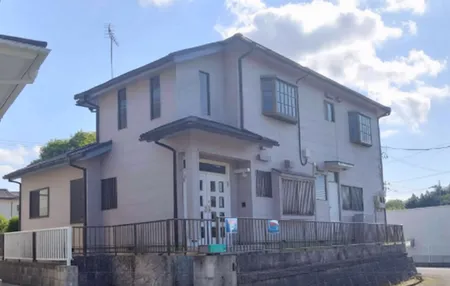
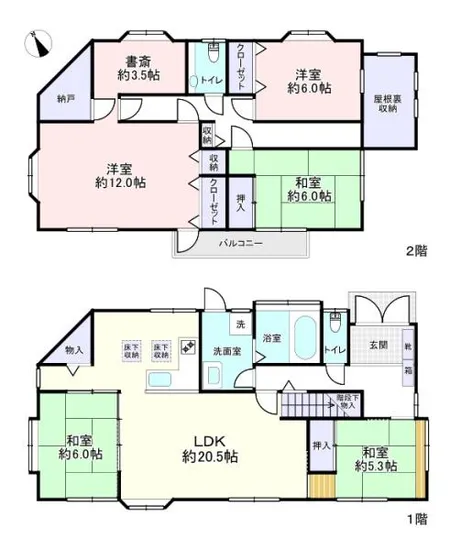
The house was very roomy, with a large living area on both the first and second floor. The seller had recently renovated the entire house with new wallpaper, cleaned up the window sills and doors with new vinyl sheets, and laid new vinyl sheet flooring. They had also added an impressively large, brand-new bath room. It even had one of the items from my wish list: a big second-floor room that I could spend most of my time in with my dogs.
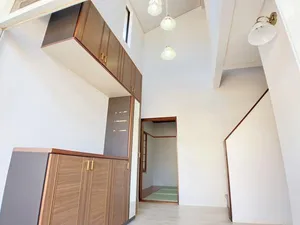
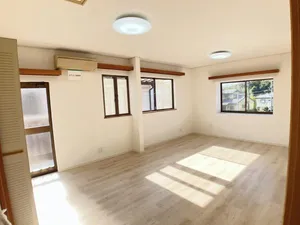
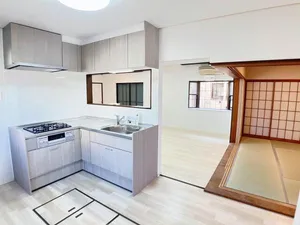
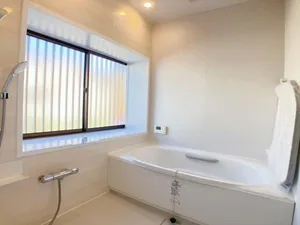
The downside was that I could see that the renovation that the seller had done was fairly cheap. There were still signs of water damage on some spots of the ceiling, a lack of attention to detail in the window sills where old, water damaged wood was showing through, and uneven wallpaper where the contractors hadn’t bothered to tear off the old paper cleanly or apply putty for even, smooth adhesion.
The exterior had issues, too: the retaining wall was in terrible condition and the yard was home to a pile of shrubbery and leftover construction materials that I was warned may be home to snakes.
Even so, I felt like I was at the end of my rope and that, while not perfect, the house met enough of my basic requirements that I could improve it over time. It was clear that I would not be able to afford to bring in a renovation company to redo everything before I moved in, so I spent a few weeks looking into costs and staging everything mentally, to get a feel for a renovation timeline that I could pay for myself while also living in the house.
I’d always wanted to have solar panels, and battery installations are still somewhat rare. This meant that in the summer, my air conditioning costs would be largely offset by the daytime sun, and I wouldn’t even have to pay for the solar panel installation! I did know that I would have to buy a new battery at some point (for the princely sum of around 1,000,000 yen), but that was Future Scott’s problem.
The price was fairly attractive too: I’d managed to haggle it down to just a bit over my annual salary because the house had been on the market for about a year, and everything that was unattractive about the house and location meant it would likely remain on the market.
I also knew property taxes would be relatively low due to not only the age of the building, but the unattractive location of the land itself. It turns out that they’re only around 70,000 yen per year!
Finally getting a home loan
After deciding to purchase, I needed to find a way to finance everything, and found out about Flat 35 (フラット35) loans: home loans offered at a fixed (“flat”) interest rate for 35 years. They are heavily regulated and structured through oversight by the Japanese government, and offered by commercial banks and mortgage companies, so there is very little room for private institutions to add on their own restrictions.
The basic criteria for a Flat 35 loan are:
- You must be a Japanese citizen, permanent resident, or special permanent resident under the age of 70.
- Debt-to-income limits are 30% for incomes under 4 million yen, and 35% for incomes over 4 million yen.
- Property requirements:
- The building must meet the basic requirements of the 1981 New Earthquake Resistant Construction Standards.
- The loan can only be used to purchase a residence for the borrower or their relatives; it cannot be used to purchase property that will be rented or leased in part or in whole.
- There are minimum floor area requirements based on the type of residence, such as 70 square meters for a detached home.
Another catch I personally ran into was that the loan product I was finally eligible for was structured in a confusing way. I had to take out multiple loans: one for the property itself, another to cover fees and handling, and still another to help pay for initial renovations. I hadn’t done enough research to learn about bridge financing (つなぎローン, tsunagi ro-n) and had naively assumed that one loan would cover everything!
I additionally found out that I was required to pay a lot of fees and a deposit up front in cash, though I was reassured that the loan would come in a month or two later and that the fees would come back to me. That put me in a tough spot as I was not especially liquid at the time.
One benefit of the Flat 35 is that, unlike some other mortgages, its terms and conditions require a baseline inspection of the property for general safety, earthquake resistance, and levelness. I felt that given the combination of this mini-inspection and the defect insurance, I could forgo an actual pre-purchase inspection and instead put that money toward the cash fees.
Buildings settle over time, and this one was no different. We found during the Flat 35 inspection that a part of the kitchen was less level than allowed. The seller paid out of pocket to have a carpenter come in and re-level the kitchen floor. Though in some ways this gave me even more confidence in my decision, it also made me uneasy as it was my first glimpse of hidden problems.
Despite all of those bumps in the road, I made it through the loan process for the first time and was told that I could receive all of those loans!
^What followed was an extremely hectic and confusing in-person meetup at a bank between the seller’s representative, the loan company’s representative, the realtor, the realtor’s manager, and me. I had assumed that it would be all electronic and that there would be some kind of escrow service, but that was not the case.
SMBC did not grant us an office, a counter space, or even waiting room space to conduct our transactions, but instead ushered us into a stairwell where we wouldn’t be a bother to the other customers. We filled out paper transfer forms by hand in triplicate (one for each party) and passed them around, stamping them as we verified that each one contained the correct amount and would be executed in the correct order: from the loan company to me, from me to the seller, and another from me to the realtor to cover handling fees, as well as one from the realtor to me to cover a refund of my deposit.
When we were satisfied, we all lined up at the counter (dutifully taking a ticket number) and waited for our turns to transfer the largest sum of money I had ever handled in my life.
Turning in the transfer applications ended up being anticlimactic. After each transfer, we all had to stand around for a few minutes reloading our bank applications on our phones to check that the money had arrived where it needed to go. Once we had verified the transfers, the seller handed me a paper envelope full of keys and we all went home.
I was finally a proud, confused, and very tired homeowner.
Initial renovations with bridge financing
My original renovation plan had two parts: some work would be done first by the realtor, and then later I would do additional renovations on my own timeline.
The items I earmarked for this were ones that had an initial higher outlay, and that I also felt like I wouldn’t be able to coordinate on my own, but wanted done as soon as possible before I moved in:
- Yard cleanup, including garbage disposal, leveling and drainage, artificial turf for the dogs, and gravel all around the house.
- A small roof in the drive for my bicycle.
I decided on artificial turf for my yard because it’s notoriously difficult to maintain a consistent grass yard, but I knew I wanted something soft and grass-like for the dogs rather than rocks or dirt that would turn into a mess in the rainy season.
Also, remember how I mentioned that people suspected the pile of debris in the yard had snakes? It did: two vipers! Luckily, experienced tradespeople were handling them, instead of me walking around in shorts and sandals with a rake.
More necessary renovations out of pocket
My plan was to stage the rest of my renovations in chunks that made logical sense and also fit my finances, as I would need to pay in cash up front.
Shortly after I moved in, though, I found that I really needed some additional renovations. Unfortunately these weren’t covered under defect insurance, as I had acknowledged their current states when purchasing the property. Though I had somewhat anticipated these repairs, I thought I could put them off longer.
| Work | Estimated Cost | Actual cost | Background |
|---|---|---|---|
| Retaining wall fixes | 1,000,000 yen | 700,000 yen | I knew the retaining wall and poor drainage were one cause of the house’s leveling issues, and wanted to make sure I got ahead of the curve in repairs. This felt like a fundamental longevity and safety issue, so I was happy to prioritize it first. It turned out to be simpler than we expected as the retaining wall wasn’t as bad as it looked, and didn’t contain any reinforcing rebar. |
| Front door replacement | 500,000 yen | 650,000 yen | The front door had terrible seals and was covered in little single-glazed glass windows that looked wonderful, but also made my hall extremely hot/cold. Additionally, while the home had been completely abandoned, vines had grown across and into the door, leaving unsightly, rusty holes.There were so many gaps and holes that I could stand in my hall and watch bugs just walk through my door at night! I wanted a door that would both not let outside air or water into my entrance hall, and looked nice and modern. The existing door was an outdated size, which meant that I had to choose between an expensive semi-custom door, or having the contractors do extra work to ensure that a modern door would fit seamlessly. In the end, I went with the latter solution: the contractors mounted a door that was slightly smaller than my existing one and added covers for the resulting gaps. |
| Corrugated plastic inner windows | 100,000 yen | 80,000 yen | I did some research and found that there’s plausible evidence that corrugated plastic inner windows are better than nothing for improving the insulation on single-glazed windows, so I hired a handyman to put them in the room I spent the most time in to reduce my heating/cooling costs and make things more comfortable for me and the dogs. |
| Dog fence/netting | 50,000 yen | 60,000 yen | I wanted some kind of fence and netting around the artificial turf in my yard so I could let the dogs run freely without being paranoid about them running away. Having a place for the dogs to play was a big part of my motivation to own the house, so I wanted to have this done early. One small catch was that there were fences bordering my yard that turned out to not be my fences, so the handyman had to go to each neighbor and ask permission to hang netting on the fence so that my dogs wouldn’t slip through the bars. Luckily, all of my neighbors agreed. |
| Privacy film application | 50,000 yen | 80,000 yen | I didn’t expect that the markup on privacy film from the tradespeople would be so high, so I bought it from Amazon myself and had them use it. The reason the cost ended up being higher than expected is that 80 square meters of film doesn’t necessarily fit 80 square meters of windows neatly. |
Finding people to do the work
I’ll always happily tell anyone that I’m not a DIY guy. I’m not good with my hands, with tools, or with crafts. I bought a house with no delusions that I would embark on some kind of Instagram-worthy DIY journey. Even with something as simple as applying privacy film, I knew after a single YouTube video that it was not something I would be able to do to my own high standards.
Apps like Curama will help you find specific types of tradespeople, and I needed them for small tasks like replacing my kitchen faucet, putting privacy film on my windows, and adding some new electrical outlets. I also used Google to find a local handyman for some “odd jobs” where there’s no pre-existing trade, like cutting and installing corrugated plastic inner windows and setting up a dog fence. It was also way cheaper to find and arrange everything myself.
However, for larger projects like replacing my front door or repairing the retaining wall, I needed an actual company to organize things and marshall experienced, trustworthy tradespeople. Luckily, this town has a construction firm that’s over a century old and has a large list of reputable tradespeople it can call in for different kinds of work. They’ve rallied plumbers, painters, paper hangers, retaining wall masons, roofers, carpenters, electricians, and more for me.
I’ve learned a lot from not only the tradespeople, but also from the woman who manages my projects. The downside of finding people yourself is that even if you read reviews, you don’t really know the quality of anyone’s work until they’ve done it. I’ve been disappointed in a few cases, so I now tend to pay the extra fee to rely on a project manager’s network.
One example in my home is that several of the walls have large, diagonal load-bearing beams that would not normally exist. This is a good deviation from expectations, but also means that it’s more difficult to simply add a window or electrical outlet to a given wall due to an unexpected load-bearing support.
The project manager explained to me that she has two carpenters in their 70s (still very spry and extremely strong!) that she prefers for projects like my house, as they’ve built and repaired thousands of homes like mine and know what to look for, whereas younger carpenters trained only on modern standards are often confused by the disorder and cannot foresee or check for potential complications in older homes.
I really appreciate this type of thoughtful staffing, though it comes at a higher cost in both money and time. When you’re trying to get specific contractors, you have to deal with coordinating all of their schedules. I’m lucky in that I don’t really have any pressing demands in terms of scheduling, but if you do, you can see how having a pool of only 2 potential carpenters instead of 10 could make planning more difficult.
Did I buy a lemon?
Cheops’ Law: Nothing ever gets built on schedule or within budget.
Even after all that work, I started to find problems just after moving in. I was about to be extremely thankful for that defect insurance.
Sinking floors
Shortly after I moved in, I realized that there were at least a dozen spots in multiple rooms around the house where the floor felt mushy. I worried that there was water damage rotting the wood, but the actual answer was less scary: the floor consisted of vinyl over very thin plywood that could not support my 120 kg weight.
In many cases, this layering was sufficient to support people’s weight, but in my 120 kg case, the original plywood had begun to buckle, leading to the unnerving spongy feeling.
This was judged to be a material defect, and thus the seller was responsible for fixing it. The carpenter believed that the joists needed to be reinforced and the only real solution would be to judiciously lay modern plywood (24-28 millimeters), level everything out, and top it with modern veneer flooring (12 millimeters).
I was lucky that the carpenter and project manager went to bat for me against the seller and insisted that this was the only realistic solution. It built my trust in them and gave me a lot of peace of mind when it seemed that I had bought a lemon.
The seller conceded and agreed to pay for reflooring the two most problematic rooms and their closets, which were also the two largest rooms of the house on the first and second floors. I agreed to accept only joist reinforcement in the halls and kitchen, but asked that we add on additional work at cost for myself to reinforce and refloor the bedroom and another room that I planned to use as a home gym.
One unforeseen result, though, was that I did not receive a New Year’s card from either the seller or the realtor. In Japan, it’s extremely common for businesses to send cards to customers, especially ones they’ve had large transactions with, so this was a surprise and a sign that I had really upset them. It was so unexpected that when I told the contractors—who had all sent me cards—they were completely blown away.
Poor vinyl application on window sills
The house had been abandoned for a while and had water damage on the window sills, to which the seller had applied wood grain vinyl.
Some of the applications were extremely poor and uneven, especially where the tradesperson had both forgotten to apply putty to smooth the surface and also had not cut around the window well. The result was that the vinyl didn’t fully cover the scarred wood and was prone to tearing.
I asked the seller to redo the vinyl at their cost under the defect insurance, which they did after weeks of back and forth.
No hot showers!
By the end of my first few weeks in the house, I was fed up with the water. It took forever to heat up, it wouldn’t hold the temperature, and the pressure was absolutely lousy.
I complained to the seller about my Ecocute (an all-electric hot water heater). At this point, they were extremely tired of me.
They asked me to “wait and see” and claimed that it might need “settling in” time due to its age. When I finally convinced them that it was completely unusable, they said that they would only be able to replace it with a used model and that it would take 8-12 weeks for them to find someone to come do the replacement.
I was also extremely tired of them, so I let it go and decided to buy my own Ecocute from a company that could deliver and install it that week. I plopped down some extra cash for a high pressure model with a family-sized tank so that we’d have enough hot water when my sister and her family visited, and I’m glad I did.
That first shower felt like the most expensive shower I’d ever taken, but it also felt great!
Air conditioner problems
Problems with the air conditioners were my first real taste of home ownership. When I moved in, the air conditioners were about 20 years old. They generally worked ok, but rattled quite a lot. Shortly after moving in, I realized that one was leaking quite a lot of water, and another could only occasionally send puffs of room-temperature air into the room.
There was also no air conditioner in the room I planned to use as a bedroom, and none in a few guest rooms. Given that summer temperatures indoors would sail north of 35 C, I knew I needed them.
I’ve bought and had air conditioners installed in the past and as far as I knew, it wasn’t a big deal. Boy, was I about to get a surprise!
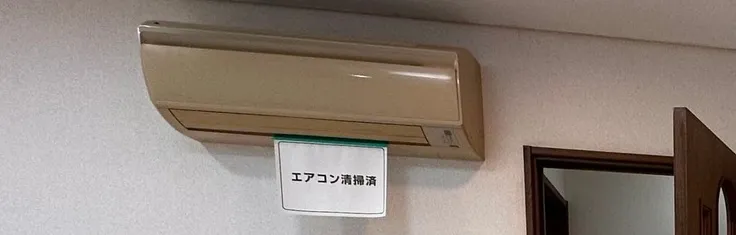
Those of you with sharp eyes may already see the issue: there is no visible ducting or power cable.
Those of you with even sharper eyes may realize another issue: this is a wholly internal wall. You can see the hallway and door to a room behind the air conditioner.
When I first viewed the house, I thought something was off and asked the realtor. He claimed not to know anything about the air conditioners because they were being sold as-is. His stance was that everything was probably just tucked neatly behind the air conditioners, and that was perfectly normal.
I asked if he knew if that was more expensive or if it would impact replacements or repairs and he shrugged, saying he’s not an air conditioner repairman.
That was a yellow warning flag, and one I tucked away in my mental notes to look into later. Unfortunately, “later” in this case meant that I forgot about it until one of my air conditioners broke!
Embedding your ducting means that none of it is visible because it’s all in the walls/ceilings/floors. It also allows you to place units on interior walls where external ducting would have to breach multiple rooms’ walls.
The downsides are that embedded ducting:
- May leak somewhere with you being none the wiser
- Cannot be easily removed, replaced, rerouted, or repaired
- Predetermines what kind of replacement units are available to you
Additionally, my air conditioners had a non-standard installation where they were set up to run off of two jumbo external units, with three air conditioners linked to a single unit. This meant that I couldn’t replace a single air conditioner due to the embedded ducting’s pre-determined routing; I had to replace them all at once.
Unlike the other problems, the air conditioners were specifically not covered under the defect insurance and I would have to pay out of pocket. My wonderful project manager held a number of consultation and planning sessions with me and the HVAC specialists to figure out what we could do. In the end, we found that modern Daikin air conditioners have a similar footprint and connections to the old ones, so we could mount those in place without fiddling with the embedded ducting too much.
They would not be compatible with the current large exterior units, but we could use most of the existing ducting to replace the big exterior units with smaller ones, one per air conditioner. There wasn’t enough space outside to replace two large units with six small ones, so we stacked two and then ran extensions to the ducting to relocate two more.
While I had everyone there anyway, I decided to add some more air conditioners in the other rooms the standard way: punching a hole through the wall for an external duct.
Would knowing all this in advance have put me off buying the house? Probably not, but I still wish I’d had some inkling in advance, because “replace every air conditioner and pay a lump sum north of a million yen” was not in my plans for my first year of home ownership.
I was an extremely grumpy home owner for the longest time after this, but I now have modern, energy efficient air conditioning in every room.
Roof and siding
The contractor did a free inspection of my siding and the roof after they checked for asbestos. They found that it hadn’t been maintained or replaced since the house was built, but that it otherwise seems to be in remarkably good shape, with the worst issues being some missing nails on the roof that they were happy to replace.
The ballpark for my house was around 2,000,000 yen due to not only its size and height, but the difficulty in arranging scaffolding around it; two sides of the house didn’t have enough area for scaffolding and would require the contractors to take down a fence and set up a crane on the road.
Fortunately, because my roof and siding were in such good condition, nobody saw an issue with putting it off a few more years.
Small personalizations
Once I’d taken care of all of the critical bits and pieces, I had the luxury to realize that one of the great things about owning a home is that you can modify anything to suit your tastes and lifestyle. It actually took me a while to embrace this, because I’ve rented for the last two decades and Japan is extremely strict about what renters are allowed to change.
There were a number of small things that bothered me about my home that wouldn’t cost too much to fix, and would make me much happier with my space. I was determined to improve them to keep my morale up, while also saving money for the next large set of renovations..
Japanese detached homes commonly have a nameplate (表札, hyousatsu) facing the street to help people identify the home. These usually show the name of the owner and the street address. I found a design that I liked and ordered it with the top portion showing my last name in English and katakana, and the bottom portion showing my street address—no more misplaced deliveries or confused phone calls.
My house originally came with a small, broken mailbox along the street. The renovation company replaced it with an equally small, metal mailbox in the same place. I occasionally had problems with people running into it, and it wasn’t particularly weatherproof. If there’s anything I hate to get in my mail more than bills, it’s soggy bills.
I wanted a better, weatherproof mailbox. While I was searching, I realized that because I’m a homeowner, I don’t have to settle for a mere mailbox for letters! I started looking for parcel boxes (宅配ボックス, takuhai bokkusu) so that people could leave parcels in a safe place as well. I picked this one because it’s fully enclosed, lockable, and can be secured so that it doesn’t fall over in an earthquake. I’ve had it just outside my door by my porch for a year and a half now, and it’s greatly increased my quality of life.
The next step: Major interior renovations
You may remember that I had the floor reinforced and then added new thick wood veneer to replace the vinyl flooring in parts of my house. After a year, the downstairs hall also developed some unstable spots.
Unfortunately for me, the defect insurance had run out, so I would have to pay for the flooring and repairs on my own.
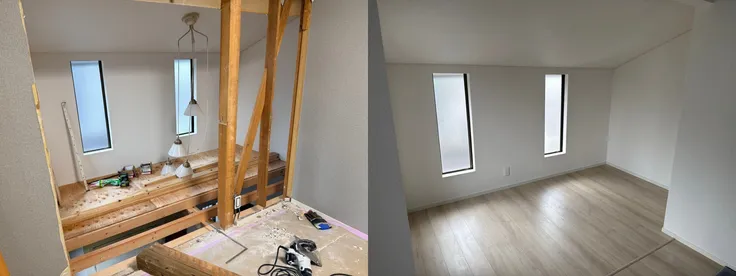
In addition to the flooring, I decided to kick off a larger-scale project while I had the carpenter and also:
- Convert an upstairs room from tatami to flooring
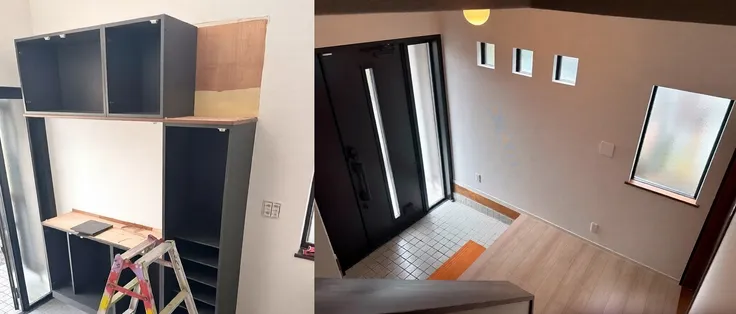
- Add a ceiling to the two-story entrance hall, which would expand the room above
- Remove the existing too-large shoe cabinet that blocked the window by the door
- Tear down the wall in the room above to open it to the new floor
- Add electrical outlets in the new areas
- Add double-glazed windows to the now cave-like entrance hall
The smaller entrance hall retains heat and cold more easily, and the new windows I added are double-glazed, which brings my house one small step toward having completely modern windows.
The work ultimately took about a month for one carpenter to do in six to seven hour days, with additional tradespeople coming to help with the wiring and wallpaper for about a week. It ended up only costing around 50,000 yen more than the original estimate.
Bringing light to the situation
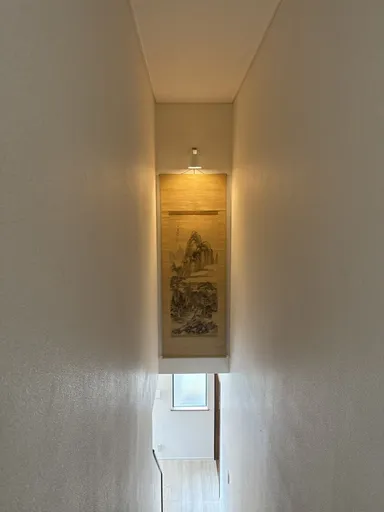
One more addition to the upstairs room was a new wall above the stairwell where there had previously been none. I knew that it would turn the stairwell into a dark cavern, so I had two requests that the carpenter thought were extremely unusual: a window and a light above the window—in the stairwell!
The light isn’t for the stairwell itself, but is actually aimed down at the window. My goal was to have a simple way to access the opposite side of that wall to be able to hang art and posters, and it turned an otherwise featureless and dark wall into a display area.
Where is my wallpaper?
Other than the ones I brought to the table, we ran into some other surprises with this interior renovation, especially since it was the first time my contractors had done any major work on this house. The biggest one was that the dark grey, textured wallpaper the seller had used in the upstairs room was no longer sold. That wallpaper turned out to be around 10 years old and nothing close to it existed anymore.
We had originally planned on buying that wallpaper and extending it into the new section of the upstairs room, but since we couldn’t find it anywhere, we had to wallpaper the entire room again in a brand new type of wallpaper! That was an expense none of us had anticipated, and was the reason that the work went slightly over the original estimated cost.
The project manager explained to me that it’s pretty normal for the company to stockpile a bunch of each kind of wallpaper they use for clients so that they have enough on hand in the future for things like this, or patches and repairs. It turns out that they also have a stockpile of the flooring I’ve been using, just in case they need to do work on that in the future!
Future plans
One of the major remaining tasks is adding real inner windows (内窓, uchimado) to my house while the government subsidy is still effective. This will make my HVAC more cost efficient and help buffer against temperature changes indoors. I want to do it as soon as possible this year while the subsidy exists, but it’s estimated to cost around 1,000,000 yen.
Completely replacing windows is rare because that involves more complex structural work and siding replacement/repair. If you buy a used home with single-glazed windows, you should be prepared for a substantial outlay to make your home more temperature-resistant.
I had a lot of doubts when I first bought this house, and it definitely doesn’t meet my original ideal of a fancy, Instagrammable Japanese fusion house. I definitely had even more doubts after I moved in and started running into problems.
Are used homes in Japan worth it?
There are a lot of reasons my house was particularly cheap, and the most obvious ones are location, distance to the nearest station, age, and build quality.
However, there are other, less obvious factors that make used homes in Japan cheaper in general than in other places. The most basic financial reason is that in Japan, the bulk of a property’s value is held in the land, while the value of the building itself will depreciate year over year. The National Tax Agency defines the statutory useful life (法定耐用年数, houtei taiyou nensuu) of buildings and related depreciation calculations.
There are several different factors that can affect the value of a home. A home that has been through a flood will have many structural problems that reduce its value even more. Very old homes that were built to extremely high standards and maintained over the decades—such as traditional Japanese kominka—may retain more value than expected, even when well past their statutory lives.
Normal homes built before the revised earthquake guidelines can be made more attractive to buyers through performance-enhancing renovations, such as the addition of modern windows or further earthquake proofing. However, even with these improvements, they will never recapture or exceed their original values.
The regulation of home depreciation has other effects on the ability to resell homes in Japan. Once a home’s value has been reduced to nothing, banks will be extremely reluctant to issue loans as there is no way for them to recapture the collateral value in the event of a default. As a result of this, homeowners are incentivized to try to sell at lower prices to enlarge the pool of potential buyers, which creates a buyer’s market.
^Ultimately, if you choose to buy a used home in Japan, you should look at it from the standpoint of whether that building and its location are good for your lifestyle. Assume that you will never be able to sell a property for the same or more than you bought it for, if you’re able to sell it at all.
A final reason for many homes being cheap is inheritance. Homes are often passed to the children, often with a share of the property divided among them. These children may live in completely different places and have no interest in maintaining or using the property they’ve inherited, but they are still responsible for the property taxes.
The home thus becomes a so-called akiya because it is a burden to its owners. Through abandonment and neglect, the property deteriorates more and more over time and its value drops drastically. This photo shows clearly how much my home had been neglected before the family sold it to the flipper company, which in turn sold it to me.
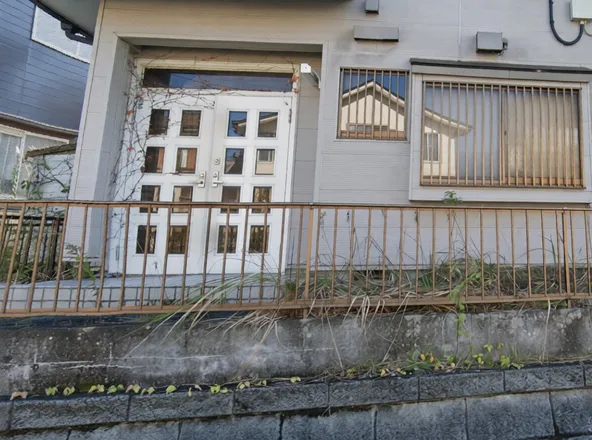
In the case of my home, the previous owners had died and their children had each inherited a piece of the property, and with it responsibility for paying the property taxes. My guess is that they all knew it would be difficult to sell in its original state, but also that it would cost a lot of money to demolish the building. The taxes weren’t quite high enough to care much, but the whole property was a burden to them, so they sold it to the renovation company I eventually bought it from.
For my situation, with my budget and lifestyle, this was absolutely a great purchase. I can easily see how this home wouldn’t have been worth it to people in other situations: for example, if they frequently had to commute to Tokyo, or were hoping to raise children.
Home sweet home
My Japanese home renovation journey has been very rocky and stressful, but I now have a home I’m happy with and plans for the future.
I’m very grateful for the project manager at the construction company as well as the reliable and helpful team of contractors I’ve had with me. There’s no way I could have done any of this without them, and I’ve learned so much from all of them along the way!
I’ve been living here for over two years now. I’ve had friends and family visit, and having the extra space plus another toilet really made it possible for me to host them comfortably for weeks at a time. My dogs have lots of space to themselves and don’t bother my guests, even the ones with allergies.
I’m looking forward to being able to continue to invest in improving my own home!
Disclaimer: I have purposefully changed some details and photos to protect my privacy. These edits do not materially affect the decisions I made in the journey of buying my home.