
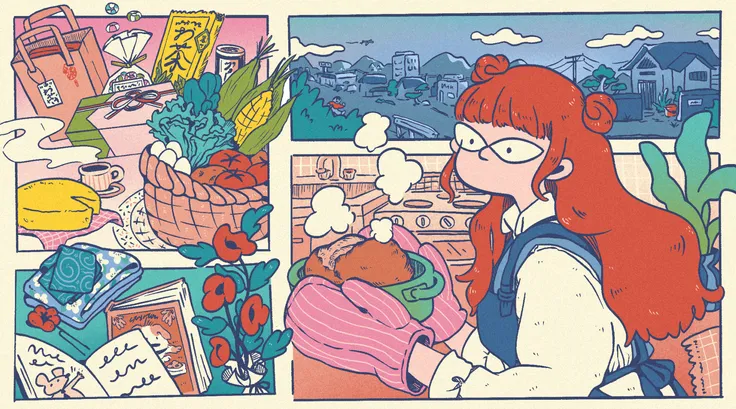
I started baking sourdough bread in self-defense. My family was being inundated by gifts from our friends and neighbours: vegetables from their gardens, newly-laid eggs, omiyage, homemade cheesecakes, English books for my children, kimono, old family artifacts, and more. That’s not to mention the baby-sitting, the dog-sitting, the constant offers to drive us places, and the invitations to neighbourhood events, coffee, barbeques, and dinner.
I needed to return these favors, but what was I supposed to offer? My precious stock of Reese’s Peanut Butter Cups was soon gone. Our house is too small to properly entertain. I certainly can’t offer English lessons to everyone on my street!
It isn’t just me who thinks so, as I discovered while speaking to a fellow mom at ballet class, a woman who grew up in Osaka and had only recently moved to Nara. “People here are really nice, right?” I said. She agreed: “Sometimes they’re so nice, I don’t know what to do!”
The intent of this article is to offer some idea of what you can do, if you are considering moving to a similar small town, or if you are also feeling overwhelmed by the number of Japanese coworkers, friends, or relatives who come bearing gifts.
- First, give up on getting it right
- The moving-in present
- So. Many. Gifts.
- Giving money
- Omiyage
- Advice for day-to-day gifting
- Advanced level: develop a specialty
First, give up on getting it right
This isn’t a comprehensive explanation of Japanese gift-giving culture. I don’t believe that’s possible, given regional variations in etiquette, and even if it was there’s still no way I’d get everything correct.
This became quite clear to me during a recent conversation with my friend Kitazoe. I asked her about specific instances when fresh money should be acquired. I knew crisp new bills were important for weddings and births, but what about when just giving money to a friend—for example, when repaying them for your share in a meal?
“It’s okay if the bills aren’t brand new,” she said, “but it’s best to put clean bills in an envelope. However, if you can’t provide clean bills, it’s considered good practice to include a note saying, ‘I’m sorry, but these are not new bills.’”
An apology note, to a friend, for a wrinkled bill? That was the point at which I had to go lie down for a while. In the US we just use Venmo . . .
I have developed some survival strategies, though, which have enabled us to mostly keep pace with our friends and neighbours. In just under two years we’ve become well-established in our neighbourhood, which isn’t bad for an all-American family living in the countryside. Our kids, our dogs, and my husband being a shakuhachi master have all played a role in our acceptance here, but it was gift-giving in particular that cemented many of our best relationships.
The moving-in present
I hadn’t prepared any moving-in gifts (引越しの挨拶, hikkoshi no aisatsu) when we moved into our first house in Hachioji, and we barely spoke to our neighbours during our two years there. The fact that we were surrounded by empty houses (空き家, akiya) probably played a role—fewer neighbours means fewer opportunities to chat—but I also had no idea that moving-in gifts were expected.
Who gives the gift?
To offer some background: I’m from a middle-class family and grew up in Colorado in the United States, which means my upbringing typifies the expression “middle America.” For those from other countries who are unfamiliar with the phrase, I would loosely describe it as “American TV sitcom family culture, but not that funny.”
In my home culture, gift exchanges are confined mostly to holidays and life celebrations, with Christmas being the prime opportunity to shower people with presents. And as it happens, our cultural rules for moving are the opposite of Japan’s. When somebody moves onto your street, you show up with cookies or brownies to welcome them to the neighbourhood, not the other way around.
The first present
I don’t live in Colorado anymore, though, so when I belatedly learned about moving-in gifts, I decided to give them a shot.
Many of the online articles I read suggested presenting your new neighbours with washcloths or tissues. However since we moved to Nara in October, I opted for Halloween cookies in a cute spooky tin, and took my daughter around with me to our new neighbours to distribute dessert.
We visited our neighbours to the left, to the right, and behind us. Not everybody answered their doors, and nobody spoke much English, but we did our best to communicate who we were and why we’d showed up with cookies.
Our last stop was at the house across the street from us. When my daughter and I rang the bell, the grandmotherly-looking woman there was delighted to see us, and also spoke some English. Once we handed her the cookies, she went running back into her house, and came back a minute later with a souvenir gift (土産, omiyage) from another city—in this case, mochi. She insisted we take the box.
She’s going to run to give us a present just seconds after we gave her one? That’s some fast turnaround, I thought to myself. It proved to be my first glimpse into just how seriously people in my new town take reciprocating gifts (お返し, okaeshi).
So. Many. Gifts.
As mentioned, our family is constantly receiving presents of all kinds.
Apology gifts
“Thank you” gifts are common everywhere, although exchanged far more consistently in Japan than in most countries I’ve lived in. What surprised me more were the “Sorry!” gifts, especially in situations when I, as an American, wouldn’t have considered any apology or explanation necessary.
For example, the house behind ours decided to have its external wall repainted. About a week before the work began, the woman living there distributed small bags of cookies with notes attached, explaining that the wall would be repainted, that workers would be present in the neighbourhood during these specific dates, and that they were very sorry for the inconvenience.
In our case, it wasn’t the cookies that impressed me so much, but the fact that she’d gone to the trouble to translate the note into English just for our family.
Neighbourly gifts
More often gifts aren’t for any specific purpose, but are “just because.” These were particularly common shortly after we first moved in. Our new friend Kawahara showed up to our door one day with a special batch of fresh eggs from a nearby farm. Why? No particular reason, except to be friendly.
If any of your neighbours have extensive gardens, get used to receiving vegetables. Down the road from us is Yamashita, an elderly woman who lives in the same house she grew up in, and works daily in the garden her father designed. As a result of her labours she is always pressing produce upon her neighbours.
In one of my first encounters with Yamashita, I was walking down the street early in the morning and saw her giving away small green limes to several other neighbours. She came up to me and asked something in Japanese, which I eventually understood as “How big are your pockets? How many of these can you carry?” Since they happened to be deep cargo pockets, Yamashita got to stuff quite a few of the little limes into them!
Sweet childhood treats
A related category is “candy for the children.” Kansai grandmothers are somewhat infamous for distributing “ame-chan” (the local slang for candy) out of their purses, but it happened all the time in Tokyo, too.
When my daughter moved to Japan at the age of four, she spoke only a few words of Japanese. But by the time she was five, she had evolved a whole system for cozying up to both grandmothers and high school girls on the bus, and charming them out of whatever sweets they might have on hand, up to and including baked goods.
“Used” gifts
Many of the best gifts we’ve received aren’t new. Sometimes they’re just small and thoughtful, such as old English-language picture books for my children, or the tortoiseshell hairpin I got from a student who now keeps her hair short.
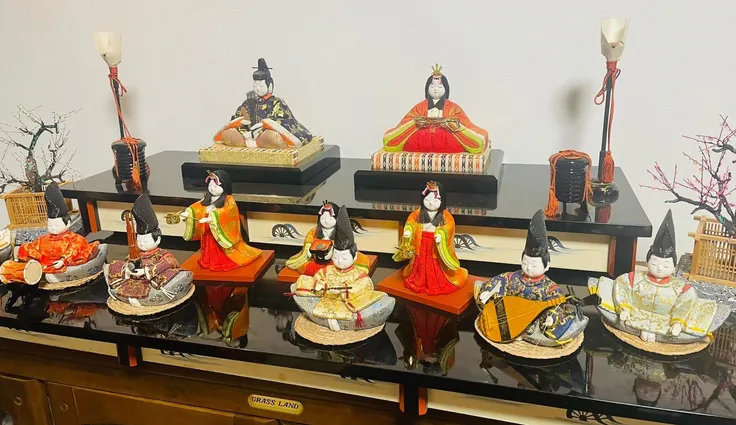
Other gifts are staggering in their scope. A couple living down our street was delighted to discover we have two children about the same age as their grandchildren, who, ironically enough, are living in the US. Eventually they gifted our daughter with an enormous ceremonial doll set (雛人形, hina-ningyou) they’d originally purchased for their own daughter, and our son with the miniature samurai armor (冑, kabuto) that was the husband’s as a child. Not only were these generous presents, they were invitations to participate in Japanese culture, and I appreciated the subtext.
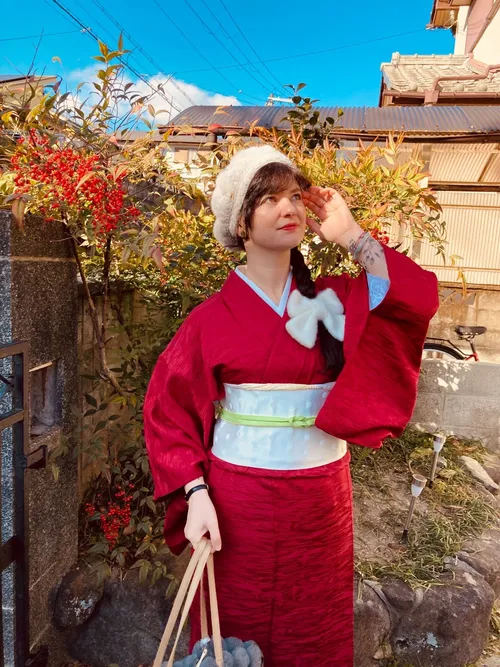
Many older Japanese people no longer wear kimono, but still have fond memories of the garments or are just reluctant to throw them away. Present them with the opportunity to gift that kimono to someone who will actually use it, and within a few weeks you will probably receive big boxes or bags full! At least some of it may also be really, really nice—for example, a red silk iromuji (色無地) that was hand-stitched by my friend’s mother in the 1960s.
Giving money
In Japan, formal or ceremonious occasions are usually marked by monetary gifts (ご祝儀, goshuugi).
For a wedding
My only opportunity to attend a Japanese wedding was foiled by a last-minute cold, so we opted to mail the gift money instead.
I knew in advance that a special envelope would be required. I’d seen them at stores before, but this time I examined each one with Google Translate, to be certain I was getting a wedding-themed one. The various kinds of celebration envelopes can look similar if you don’t read kanji well, so double-check the packaging.
We prepared the envelope and new, clean money (ピン札, pin-satsu) according to the rules. This took longer than expected because my own bank, Japan Post Bank, was unable to supply us with crisp bills. Then the other bank we went to had already run out of bills for the day; you have to arrive before noon to make your request. When we finally obtained the cash, we sent the gift by registered mail, as required when sending currency via the post.
During this process, Kunisawa repeatedly assured me that my family would still receive gifts to thank us for celebrating with them (引き出物, hikidemono), too. This confused me, as wedding favors in the US are usually just little trinkets or candy, and hardly worth mailing to absentee guests.
As a result I was quite surprised when the gift catalogues arrived! Several glossy magazines advertised presents ranging from horse-riding experiences to gourmet meals to nice kitchenware, and we were expected to select three of them. Picking out the presents was half the fun, and I found it a charming way to thank wedding guests. One of those gifts, a pretty red ceramic bowl, is something I use every day.
Other monetary gifts
The other major money-giving occasions in Japan are the New Year, graduations, new babies, and funerals. I haven’t had to prepare any funeral gifts, or “condolence money,” yet—fingers crossed!
I have already learned that condolence money should, unlike other monetary gifts, not consist of new bills. Giving crisp new money during a funeral apparently implies that the sad occasion was prepared for in advance, which admittedly does seem ominous.
Omiyage
If you work in a Japanese office, you’ve almost certainly eaten a small, individually-wrapped snack brought back from somebody’s holiday, and have probably been expected to offer small, individually-wrapped snacks from your latest trip as well.
While some people may complain about omiyage, I’ve personally found the custom helpful. Because of the almost universal generosity of our community, I’m constantly looking for ways to return gifts and repay favors. Bringing back omiyage is an easy, natural, and “culturally safe” way to do so.
One of my best friends in this town is only my friend because I accidentally gave her omiyage. Kitazoe was out walking her dog and happened to be chatting with Yamashita when I stopped by to give Yamashita omiyage from my most recent trip to Tokyo. It felt awkward to hand over a box of treats to just one person, and I had extras, so I gave one to Kitazoe as well.
She seemed touched by the gesture at the time, but I had no idea how much until around a week later, when I received a bag full of handmade jewelry, keychains for the children, and cute handwritten notes in kanji, hiragana, and English. This set off a gifts-giving arms race between us, which I lost (and continue to lose) in a dramatic fashion, but which has also resulted in a close friendship between our families—and all because I had extra omiyage.
Tips for omiyage
Unsurprisingly, my first suggestion is to buy more than you think you need. You always either forget someone who should be on your list, or you will receive a gift unexpectedly and be grateful to have an extra package on hand.
The people you must give omiyage to are your extended family and coworkers, especially if you work in an office. The ones you should give omiyage to are anyone who has recently given you omiyage. You can give omiyage to anyone who recently gave you a present or did you a favor, or to anyone you’d like to get to know better. For me personally, this results in an extensive list.
On a related note, be sure to leave extra room in your suitcase, or be prepared to carry home an additional bag. Omiyage is rarely heavy but can be quite bulky depending on what you buy. The appearance of the omiyage is important—you can’t give a crushed box or a wrinkled bag—so careful packing is required.
When traveling outside Japan, local candies make great omiyage. If I visit the US I always bring back huge bags of individually-wrapped sweets, particularly sour candies and Reese’s Peanut Butter Cups. These I’ll repackage into smaller, cuter bags for distribution.
If you’re traveling inside Japan, wherever you go you’re sure to find lovely packages of omiyage ready and waiting. Typically you can purchase these at three places:
- Tourist sites: Most temples, shrines, castles, museums, etc. will have at a souvenir shop, or a nearby shopping street, offering omiyage. What’s available will be more expensive, but also has a higher chance of being unique to the area.
- Department stores and supermarkets: Either the first or basement floor of a large department store is usually dedicated to omiyage. You’ll find a wider selection there, but mostly from national chains, with fewer uniquely regional options. Supermarkets also carry omiyage but confine it to an aisle or two, usually near the registers.
- Transportation centers: Large train stations often have omiyage stores, though not as reliably as department stores. I’ve found some excellent locally-produced omiyage at stations near tourist areas, such as Nara Kintetsu and Kyoto Station. Prices on non-food gifts will be at a premium, though, so if you want to buy other kinds of souvenirs I don’t recommend doing it at the station. If you’re driving rather than taking the train, check the highway rest areas. Our town has one, and it’s the best place to get specifically local goods in addition to regionally-grown produce.
Advice for day-to-day gifting
Outside of formal occasions, these are the tactics I use to negotiate the more day-to-day gifting that goes on in our town.
Keep track (loosely)
Generalizing broadly, it’s important to keep pace and give as many gifts or favors as you receive. If you live in a tight-knit countryside neighbourhood like I do you will inevitably fail, but you do get credit for trying.
Sometimes I’m rather too conscientious about this. My children and I belong to our local kendo club, and since we don’t have a car, two other club members who live nearby take turns driving us to practice. It’s not a long trip and they’re going there anyway, but their cars do get crowded with all our gear, and sometimes they’ve even made two trips to carry us all.
I’m of course very grateful for their help. In the US it would be considered polite to offer gas money, but I double-checked with my friend Kitazoe and she advised against it. Instead I’ve tried offering cookies, omiyage, homemade treats, etc.
At first these were happily received, but the enthusiasm waned after a few weeks. The homemade treats are still appreciated—I think because they’re less expensive—but at last both club members specifically (and separately) told me that I really don’t need to give them a present every single time they drive me. In retrospect, it looked too much like I was “paying” them for doing a job, rather than expressing gratitude for a favor, which wasn’t my intent.
Usually there does come a point in any friendship when the gift exchange is less tit-for-tat. As you get to know each other better, you’ll experience less urgency around swiftly responding with an appropriate present, and can start to trust in the natural give-and-take of the relationship.
Learn when not to give gifts
There are other situations in Japan in which gift-giving is inappropriate, that aren’t immediately obvious to people from other cultures.
For example, Americans have the well-established cultural paradigm of “bringing an apple for the teacher.” You can see it in older movies like A Christmas Story, when all the children file past the teacher’s desk to hand over their modest presents, mostly fruit and small trinkets—except for the main character Ralphie, who attempts to bribe her with a huge fruit basket topped by a pineapple. Nowadays, giving a public school teacher a small present for Christmas or at the end of the year is more unusual, but not prohibited.
Not so in Japan. I knew it was considered “wrong” to give school teachers presents, but not exactly why until I once again asked Kitazoe. “Teachers at kindergartens, elementary schools, middle schools, and high schools are considered civil servants, so they are prohibited from accepting gifts,” she explained. Obviously, the Japanese have taken into account the Ralphies of the world.
What about private teachers? “Teachers of kendo or Japanese language, for example, are often not civil servants, so they may accept gifts. But accepting gifts can sometimes lead to disputes among students and parents . . . so some classrooms have a rule against accepting gifts. This is something even Japanese people find difficult to judge,” she assured me.
Don’t show up empty-handed
The rule of bringing a small gift to someone’s house when you visit is generally expected in many countries, not just Japan, but it does seem to be emphasized more here.
Right after my family moved to Japan, while we were still house-hunting in Tokyo, we stayed in a small apartment in Sumida. My children started playing with a boy in the neighborhood park and told him where we lived. Half an hour after we returned home, the doorbell rang: it was the boy’s mother, coming to invite us to a playdate later. As we spoke, she handed us a brown paper bag filled with packaged snacks, and explained that these were a sampling of her son’s favorite foods.
It was clear to me even at the time that this was an “emergency gift”—no fancy bag, no special treats, just something thrown together on the spot. However it seemed important to her to be able to offer us something, and that perspective helped shape my own approach.
Similarly, I remember when one of my daughter’s friends couldn’t get into her house after school, because the door had accidentally locked. She came home with my daughter instead and I messaged her mother to let her know. When her mom arrived shortly after, she brought with her a big bag of unpopped popcorn. Once again, it obviously seemed better to her to show up with something, even if it was a bit unusual.
I’m still not sure whether this is a universal rule or not, but I do the same thing now. “Mom, can I go play with my friend?” “Okay, but take something with you!” Sometimes that thing is nice chocolates, cute snacks, or fresh fruit. Sometimes it’s a jar of peaches, because that’s all I have.
This is just one more reason why I try to keep our “gift shelf” stocked at all times.
The gift shelf
If you take away one thing from this article, it should be “keep a gift shelf.” This is less necessary if you live in a city where a quick trip to the convenience store can sort you out, but if you live in a small town far from anything, it’s essential. Our gift shelf has saved me from embarrassment and extra hassle many times over the past few years.
Your gift shelf should include the following items.
Food gifts
An assortment of pre-packaged food gifts are available at any department store or supermarket. My personal favorite place to restock is KALDI, which often offers inexpensive yet unique international treats.
Picking foods you’re connected to in some way adds a personal touch. I bought chocolate oranges from KALDI one year and gave those to the Kitazoe family, explaining that these are a classic American holiday treat both my husband and I enjoyed as children. They loved the oranges and even found a way to make hot chocolate with them. Omiyage can fall into this category too, since you can explain “I got this on a trip to Ise” or “I found this when I was in Tokyo.”
It’s a good idea to stock a variety of sweet and savory treats, for those with different tastes or allergies. Be sure to check their expiration dates as well. I’ve had several tasty gifts go bad on me because I wasn’t paying enough attention.
Packaging
Presentation matters, particularly if this is a more formal gift to a new acquaintance, and not “Hey kid, run these biscuits I just made to Yamashita to thank her for the cucumbers.”
The easiest solution is to buy gift bags of various sizes from one of the many 100 yen stores. I personally favor Seria, as they have an “artier” selection of goods than Daiso or Can Do. The bags will be much cheaper at any 100 yen store than at a stationery store, and I haven’t noticed any difference in quality.
If you want your gifts to be as Japanese as possible, you could buy or make wrapping cloths (風呂敷, furoshiki) for your gifts. It’s an adaptable and eco-friendly option, and there are many online tutorials that can teach you different wrapping methods for any size or shape of gift.
Notes and cards
Using quality notepaper, pens, envelopes, and even stickers for thank-you notes adds a nice touch to your gifts. You can also stock up on the more formal congratulatory cards for weddings, babies, etc. if you like, although you’re less likely to need one on short notice.
While good stationery is available at 100 yen stores and bookstores, I indulge myself by visiting Loft several times a year and picking up their latest seasonally-themed notepaper: cherry blossoms and other flowers in spring, fireworks in summer, colorful maple leaves in autumn, snowflakes and reindeer in winter, etc. I like Loft’s smaller size of notepads, since I then don’t feel obligated to fill a full page with writing, and even with matching envelopes they’re usually less than 1,000 yen.
Advanced level: develop a specialty
You may have noticed that my friends tend to specialize. Yamashita gives homegrown produce. Kitazoe makes jewelry. Kawahara, who owns a cafe, usually gives people the shop’s specialty, a particularly delicious cheesecake. They’re playing to their strengths, but the diversity of talents and offerings also helps create a stronger, well-rounded community.
My own prepackaged gifts soon seemed boring, especially given the emphasis on homemade/homegrown exchanges. In 2024, I started my own sourdough culture and began baking bread and crumpets to give away. I reasoned that sourdough was something I could easily make at home, but was also uniquely American and would be interesting for my friends to try.
The sourdough proved to be a success overall, though not every recipient enjoyed the taste. Actually its biggest fan was my husband’s shakuhachi teacher, who is also an American, and I think just really missed good bread.
Unfortunately sourdough loaves require prep work, and when my schedule got busier in 2026, I finally gave it up. I’ve replaced it with faster, more spontaneous options, such as brownies and peanut butter cookies.
Recently my son has stepped up to the plate, demonstrating that he can follow a recipe and clean up the kitchen afterwards. Between his budding baking abilities and my daughter’s willingness to act as a “gift runner” all around the neighbourhood, I might have a whole new present pipeline worked out by Christmas.
Conclusion
Right now I’ve got three toys for Kawahara’s daughters that need to be wrapped, chocolates waiting in the fridge for my friend Madushi, and a tube of beef-flavored doggie toothpaste sitting on the shoe cabinet for when Kitazoe stops by with her border collie and the pound cake she baked. I’m not sure how much of this is “Japan,” how much is “rural living,” and how much is this particular neighbourhood, but I like it.
Is all the gift-giving a lot of work? Yes. Can it get expensive? Absolutely. Do I sometimes wish I wasn’t locked into a “gift-giving death spiral” with one person or another? Of course—and I’ve heard Japanese friends complain about it too!